

Japanese Rule in Hong Kong
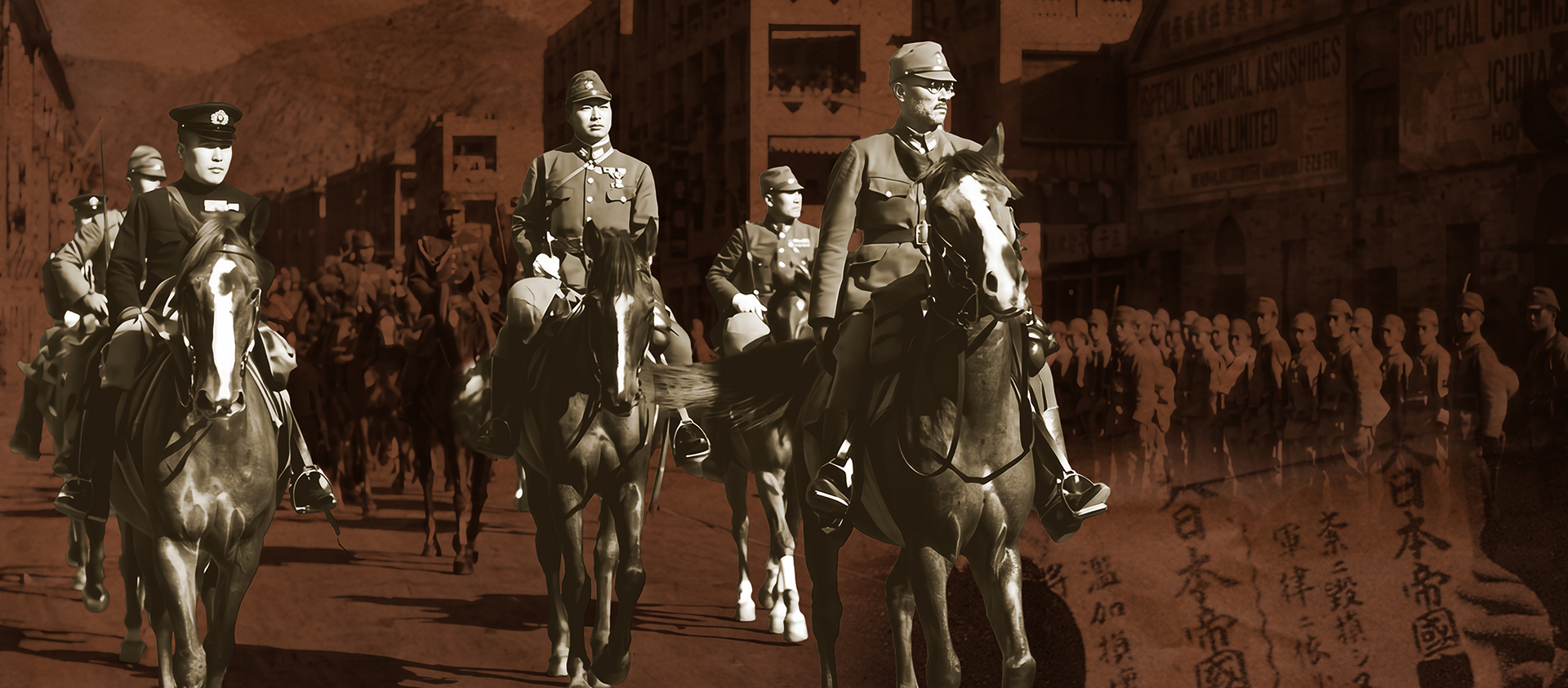
On 25 December 1941, Hong Kong fell to Japanese forces on what would later become known as Black Christmas. With the fighting over, the challenge facing the occupiers was no longer how to defeat the defenders, but how to govern a densely populated city, a major port, and a complex society under military rule.

From Military Victory to Occupation Government
The surrender of Hong Kong marked a profound transformation in the city's history. The British colonial administration ceased to function, and Hong Kong became a Japanese-occupied territory. Existing political institutions were disrupted, while civilian life was gradually incorporated into a system centred on military control, public security, resource management, and ideological supervision.
According to Hong Kong Memory, Japanese forces established complete control over Hong Kong on 25 December 1941. In February 1942, the Hong Kong Occupation Government was formally established under Lieutenant General Rensuke Isogai, the first Japanese Governor of Occupied Hong Kong. Hong Kong was subsequently administered as part of Japan's wartime military system and was regarded as an important logistical base supporting operations in South China and the Pacific. This shift fundamentally altered the city's role. Hong Kong was no longer governed as a civilian colonial port, but as a military occupation centre whose resources, infrastructure, and population were expected to serve Japan's wartime objectives.
Establishing the Occupation Government
Following the occupation, the Japanese administration created a military-civilian governing structure centred on the Hong Kong Occupation Government. Although the new administration assumed responsibility for public administration, policing, judicial functions, economic regulation, and social affairs, its primary purpose remained the support of Japanese military operations. The British administrative system was dismantled. Government buildings, public institutions, police functions, and judicial authority were transferred to Japanese control.
According to wartime records preserved by the Government Records Service of Hong Kong, the occupation authorities introduced property-registration programmes that recorded ownership, addresses, land values, and building information. Certain streets and districts were renamed using Japanese nomenclature, while buildings and land were requisitioned for military and administrative use.
These measures reflected more than administrative management. They represented an effort to reshape the urban landscape itself. Streets, buildings, schools, public institutions, and neighbourhoods were systematically reclassified, renamed, and repurposed within the framework of occupation rule.
Survival and Rationing in Crisis
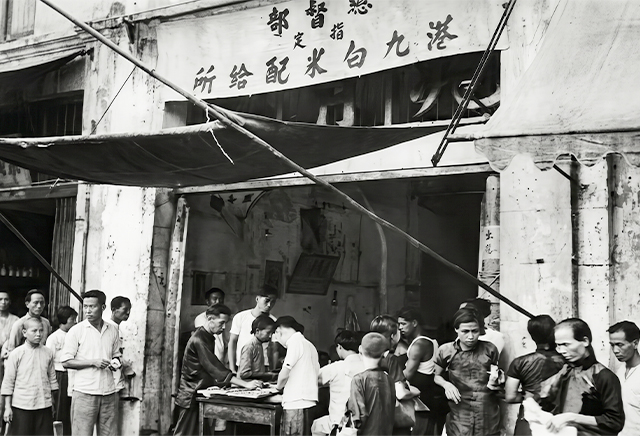
One of the most immediate and pressing challenges faced by Hong Kong's residents during the Japanese occupation was survival itself. Before the war, Hong Kong depended heavily on imported food and regional trade networks to sustain its population. After the Japanese occupation, transportation routes were disrupted, trade connections severed, and resources requisitioned for military purposes. The city's established supply system quickly collapsed.
Living Through Shortage and Uncertainty
Residents faced not only political repression and military rule, but also the daily struggle to obtain food, fuel, medicine, and other necessities. Questions that had once seemed routine became matters of survival: Was there enough rice? Could fuel be found for cooking? Would medicine still be available? Would there be enough food tomorrow?
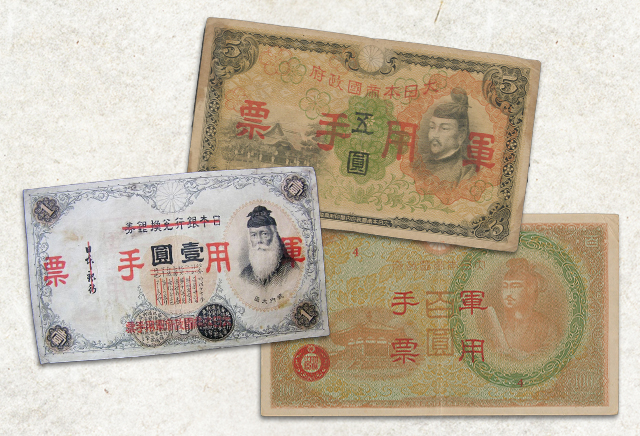
According to exhibition materials produced by the Government Records Service, Hong Kong residents endured severe shortages of food and everyday necessities during the occupation. In response to worsening conditions, the Japanese administration introduced population-reduction measures, strict rice rationing, and compulsory currency conversion into military notes. Although these policies were presented as mechanisms for managing scarce resources, they also increased the population's dependence on the occupation authorities. Access to food increasingly depended upon registration, ration tickets, permits, and compliance with official regulations. Those without stable employment, proper documentation, or strong social support networks often found themselves most vulnerable to hunger and displacement.
The Origins of the Food Crisis
Hong Kong had never been a self-sufficient city. Its dense population and limited agricultural land meant that food supplies depended largely on imports from mainland China and overseas markets. Once war disrupted maritime transport, regional trade, and inland supply routes, food became increasingly scarce. The occupation further intensified these shortages. Japanese military forces and occupation agencies received priority access to available resources, leaving fewer supplies for civilians. The resulting crisis was not simply a consequence of nature or geography. It emerged from a combination of wartime disruption, military requisitioning, economic isolation, and occupation policies.
As food supplies dwindled, daily life deteriorated rapidly. Rice prices soared. Meat, cooking oil, salt, sugar, fuel, and medicine became increasingly difficult to obtain. Many families reduced the number of meals they ate each day. Rice was stretched into thin porridge, while sweet potatoes, wild vegetables, leaves, and other substitutes became important sources of sustenance. Hunger affected more than physical health. It altered family relationships, economic behaviour, and social priorities. People queued for hours to obtain small amounts of food, exchanged possessions for supplies, sought assistance from relatives, or abandoned the city altogether in search of survival.
Economy and Society Under Occupation
Japanese occupation transformed Hong Kong not only politically, but also economically and socially.


A City Reshaped by War
Before the war, Hong Kong was one of South China's most important free ports, a major centre for trade and finance, and a key gateway linking China with the wider world. After the occupation, commercial networks were severed, banks and currency systems were reorganised, factories and warehouses were requisitioned, and private property became increasingly vulnerable to government control. The impact extended far beyond markets and businesses.
The wartime economy altered how people worked, travelled, spent money, obtained food, and interacted with one another. Employment disappeared, savings lost value, social networks weakened, and many families found themselves struggling to survive. According to Hong Kong Memory, Hong Kong's population declined from approximately 1.6 million before the occupation to around 600,000 by the time of Japan's surrender in 1945. This dramatic reduction reflected not only wartime casualties but also displacement, repatriation, economic collapse, and the breakdown of normal social life.
The End of the Free Port
Much of Hong Kong's pre-war prosperity depended upon its role as a free port and international trading centre. The city thrived on maritime commerce, financial services, shipping, and its connections with mainland China. Once Japanese forces occupied Hong Kong, however, these foundations rapidly deteriorated. International shipping routes were disrupted. Foreign trade became subject to wartime restrictions and blockades. British, American, and Allied businesses could no longer operate normally, while many companies, warehouses, and commercial facilities were seized, controlled, or closed by the occupation authorities. Hong Kong ceased to function as an open trading port and instead became an economy subordinate to Japan's wartime priorities.
The consequences for ordinary residents were severe. The decline of maritime trade affected dockworkers, sailors, warehouse staff, transport workers, merchants, clerks, and countless others whose livelihoods depended upon commerce. As trade contracted, employment opportunities disappeared, supplies became scarcer, and prices continued to rise. Many residents could no longer survive through their pre-war occupations and were forced to seek temporary work, rely on informal exchanges, depend upon relatives, or leave Hong Kong altogether.
Everyday Life Under Occupation
During the Japanese occupation, war was not confined to military headquarters, police stations, or official proclamations. It entered the daily lives of ordinary people.

Living Amid Fear and Scarcity
Street names changed. School curricula changed. Newspapers and radio broadcasts were censored. Blackout regulations darkened the city at night. Residents faced inspections, searches, and uncertainty whenever they left home—and often returned to homes where food was scarce. For ordinary Hong Kong residents, war was not a distant international conflict. It was a reality encountered every day.
The focus is concerned not only with policies and statistics, but with how people lived under occupation. Some spent hours queuing for food. Others turned rooftops into vegetable gardens. Families carefully concealed light from their windows to comply with blackout regulations. People listened quietly for news, hid relatives or resistance workers, and learned when silence was the safest response. According to exhibitions presented by the Government Records Service, residents of occupied Hong Kong faced severe shortages of food and daily necessities, while buildings were destroyed or requisitioned, and the appearance of the city changed dramatically.
A Familiar City Becomes Unfamiliar
Following the occupation, Japanese authorities sought not only to govern Hong Kong but also to reshape its symbolic landscape. Government buildings and military facilities were taken over. Public buildings were repurposed. Streets and districts were renamed using Japanese terminology. The Government Records Service notes that occupation authorities conducted property-registration programmes, renamed certain streets and districts, and requisitioned buildings and land for military and administrative purposes.
For residents, these changes represented more than administrative adjustments. Street names, schools, markets, and public spaces formed part of everyday memory and identity. When familiar places were renamed, restricted, or repurposed, the city itself felt different. People still walked the same roads and lived in the same neighbourhoods, yet they did so within an entirely different system of power. This sense of unfamiliarity was one of the most difficult aspects of daily life to measure, yet one of the most deeply felt.
- Government Records Service, Hong Kong SAR Government - https://www.grs.gov.hk/en/index.html
- Hong Kong Museum of History - https://hk.history.museum/en/web/mh/
- Hong Kong Museum of Coastal Defence - https://hk.history.museum/en/web/mcd/
- Leisure and Cultural Services Department (LCSD) - https://www.lcsd.gov.hk/en/
- The University of Hong Kong Libraries - https://lib.hku.hk/
- The Chinese University of Hong Kong Library - https://www.lib.cuhk.edu.hk/
- Hong Kong Public Libraries - https://www.hkpl.gov.hk/en/index.html
- Royal Asiatic Society Hong Kong Branch - https://www.royalasiaticsociety.org.hk/
- Commonwealth War Graves Commission (CWGC) - https://www.cwgc.org/
- Hong Kong Memory - https://www.hkmemory.hk/
- Imperial War Museums (United Kingdom) - https://www.iwm.org.uk/
- The National Archives (United Kingdom) - https://www.nationalarchives.gov.uk/
- Library and Archives Canada - https://www.canada.ca/en/library-archives.html
- Dongjiang Column Historical Research Society - https://www.dongjiangzongdui.org
- Chinese Culture Research Institute - https://chiculture.org.hk/
- Antiquities and Monuments Office (Hong Kong) - https://www.amo.gov.hk
- War of Resistance Against Japanese Aggression Memorial Network - https://www.krzzjn.com/
- Wikipedia – Battle of Hong Kong - https://zh.wikipedia.org/zh-hk/香港保衞戰