

Those Who Stood Up
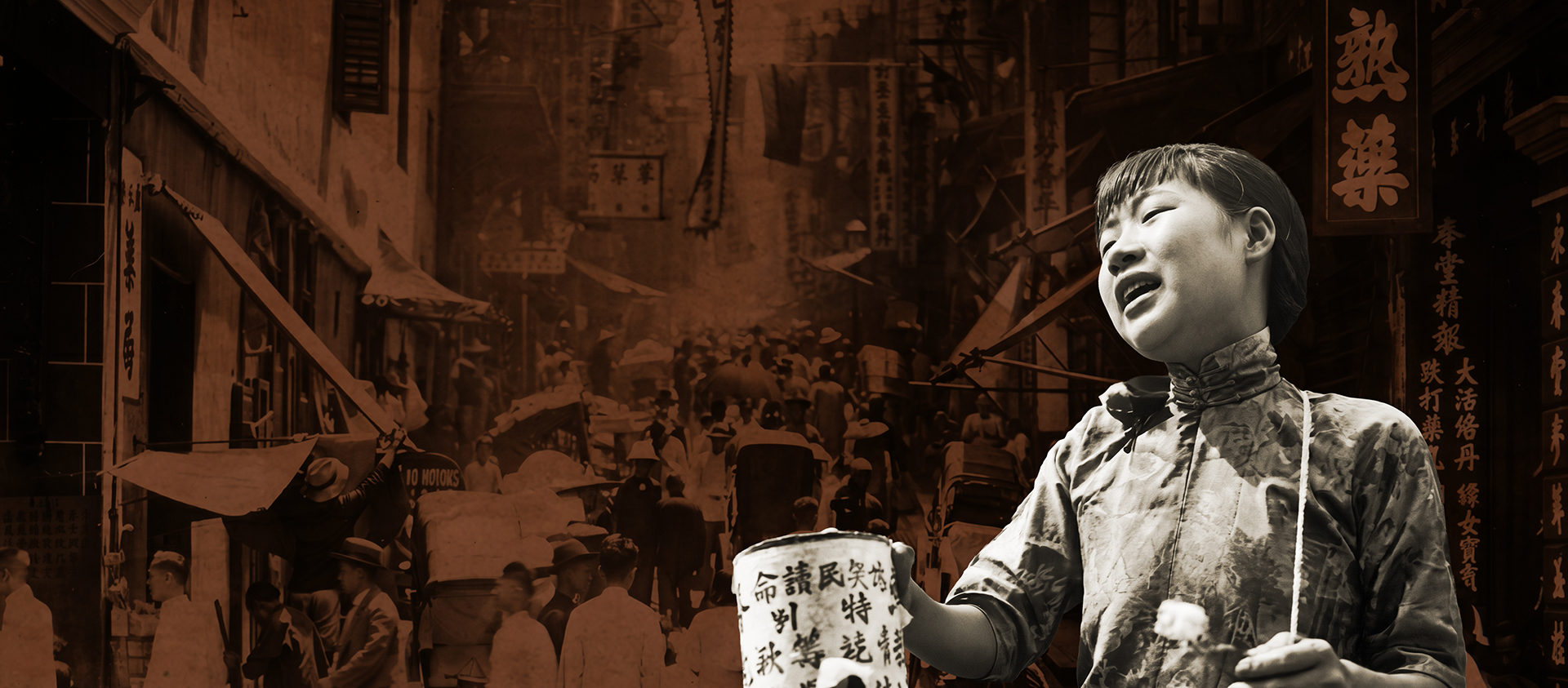
The history of Hong Kong's resistance during the Second World War is not only a story of battles, organisations, and operations. It is also a story of individuals. Some were guerrilla commanders. Others served in pistol squads, intelligence networks, rescue operations, transportation routes, or support services. Many began as ordinary villagers, students, workers, merchants, fishermen, or religious figures before making decisions that would change the course of their lives.


The People Behind the Resistance
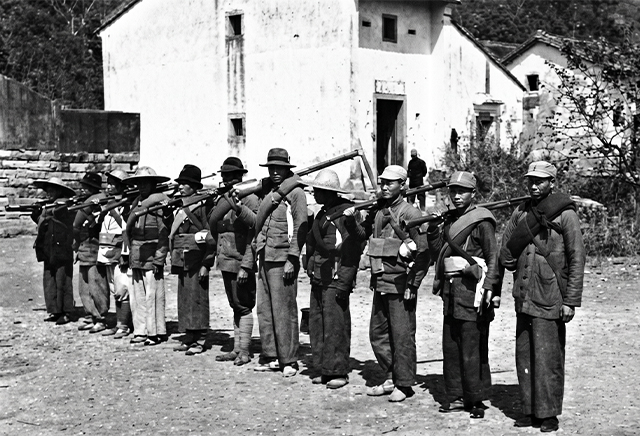
This section does not attempt to provide a complete biography of every individual associated with Hong Kong's wartime resistance. Rather, it introduces some of the people whose experiences reveal the diversity of those who participated in the struggle. According to historical records of the Hong Kong and Kowloon Brigade, the vast majority of Brigade members were Hong Kong residents, including indigenous villagers and young students. They risked their lives to participate in anti-Japanese activities and reflected a broad cross-section of Hong Kong society. Their stories transform resistance from an abstract historical concept into a history of real people—individuals with names, identities, choices, and sacrifices.
Choi Kwok-Leung: An Early Leader of the
Hong Kong and Kowloon Brigade
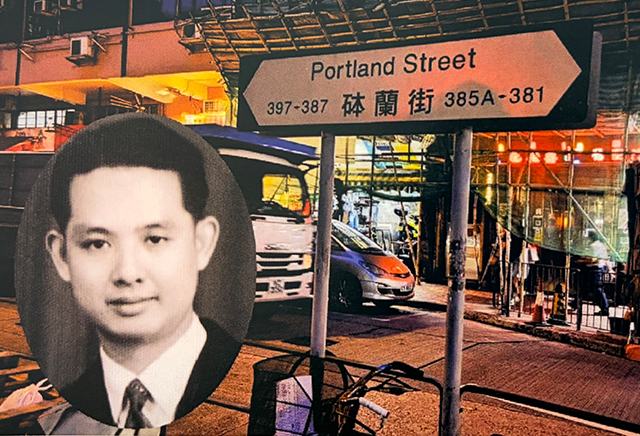
Choi Kwok-Leung was one of the key figures in the early development of the Hong Kong and Kowloon Brigade. When the Brigade was formally established at Wong Mo Ying Village in Sai Kung on 3 February 1942, Choi served as Brigade Commander, working alongside Political Commissar Chan Tat-Ming and others to organise resistance behind enemy lines.
The challenges facing Choi and the Brigade's leadership were exceptional. They were not building an organisation in a secure rear area. They were attempting to create a resistance force within occupied territory, under conditions of food shortages, disrupted communications, Japanese surveillance, and constant military pressure. The Brigade needed to fight, relocate, rescue, communicate, and protect local communities while avoiding actions that might expose civilians to reprisals. Leadership in such circumstances required not only military judgement, but also a deep understanding of Hong Kong's geography, communities, and wartime realities.
Villages That Remember
The villages of the New Territories played an important role during the War of Resistance against Japanese Aggression. They served as guerrilla bases, sources of food and intelligence, places of refuge, and vital links in transportation and communication networks.

Places Where the Memory of War Endures
Many villagers faced intimidation, imprisonment, torture, and even death, yet continued to support resistance activities. Today, the memory of that period survives not only in official histories and memorials, but also in the villages themselves. Across Sai Kung, Sha Tau Kok, Tai Po, Lantau Island, Yuen Long, and Lung Kwu Tan, traces of wartime history remain embedded in mountain paths, bays, churches, ancestral halls, village houses, and coastal landscapes.
These places appear ordinary today, yet during the occupation they witnessed courage, sacrifice, secrecy, and resilience. According to The History of the Hong Kong and Kowloon Brigade, numerous villages—including Wong Mo Ying, Chek Kang, Wu Kau Tang, Ngong Wo, and others—played important roles in supporting resistance operations. Their stories illustrate how local communities became an integral part of Hong Kong's wartime experience.
Sai Kung: A Landscape of Resistance
Among all regions associated with the Hong Kong and Kowloon Brigade, Sai Kung occupies a particularly important place. Its mountains, villages, bays, and maritime routes connected Kowloon, northeastern New Territories, Mirs Bay, and the wider Dongjiang guerrilla areas in Guangdong. For Japanese forces, this rugged terrain was difficult to control completely. For resistance fighters and their supporters, it offered opportunities for concealment, transportation, communication, and supply operations.
Places such as Wong Mo Ying, Chek Kang, Sham Chung, Shan Liu, Ngong Wo, and Tai Long all became connected, in different ways, to Hong Kong's wartime resistance. Some villages housed guerrilla units. Others sheltered fugitives, transported supplies, cared for the wounded, or provided intelligence. Many endured Japanese reprisals as a consequence of their support. The memory of resistance in Sai Kung is therefore not concentrated in a single battlefield. It is dispersed across mountains, shorelines, village lanes, and family homes.
Acts of Courage and Care
The history of Hong Kong's resistance during the Second World War is not only a story of guerrilla fighters and military operations. It is also a story of ordinary people helping one another through some of the darkest years in the city's history.
Supporting One Another in a Time of War
During the Japanese occupation, food was scarce, transportation was disrupted, villages were subjected to military sweeps, and arrests occurred frequently. Many residents struggled simply to survive. Yet despite their own hardships, countless individuals chose to support resistance fighters, care for the sick and wounded, protect those being pursued, or share what little food and shelter they possessed. These acts of mutual assistance became one of the foundations upon which the Hong Kong and Kowloon Brigade was able to survive.
In the foreword to The History of the Hong Kong and Kowloon Independent Brigade, Tsang Sang observed that the Brigade was "an army of the people of Hong Kong and Kowloon," and that every achievement it attained depended upon the enthusiastic support of local residents. The history of Hong Kong's resistance was therefore not created by a small number of armed fighters acting alone. It was sustained by villagers, fishermen, merchants, women, young people, religious figures, couriers, and countless others who shared the burden of resistance.
A Bowl of Rice, A Place to Sleep, A Safe Path Forward
Acts of assistance were not always dramatic. Sometimes they took the form of a bowl of rice, a spare bed, a temporary refuge, guidance along a mountain trail, or a timely warning delivered at the right moment. For guerrilla fighters, intelligence agents, couriers, and rescued individuals operating behind enemy lines, these seemingly small acts often meant the difference between life and death.
Under Japanese occupation, any form of assistance to resistance forces could carry serious consequences. Providing food might be interpreted as aiding guerrillas. Offering directions could be treated as collaboration with resistance fighters. Sheltering a wanted individual could place an entire family at risk. Yet many ordinary people chose to help. Their actions were not undertaken from a position of abundance. Most lived under the same shortages of food, medicine, and security as everyone else. What makes these stories remarkable is that people continued to share even when they themselves had very little.
Stories of Rescue
Many of the most remarkable stories from occupied Hong Kong do not begin with battles. They begin with rescue. After Hong Kong fell in December 1941, countless individuals found themselves trapped in a city under military occupation. Some were writers, journalists, and intellectuals. Others were prisoners of war, Allied servicemen, or civilians whose identities, professions, or political views placed them at risk.


Opening Paths to Survival
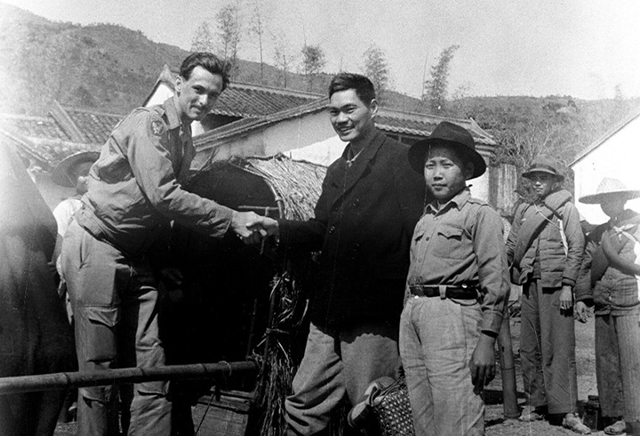
Under conditions of curfews, roadblocks, military patrols, and intensive searches, guiding a person safely out of Hong Kong often proved more difficult—and sometimes more dangerous—than fighting a battle. These rescue operations reveal another side of the Hong Kong and Kowloon Brigade and its predecessor armed work teams. They were not only resistance fighters. They were also guardians of escape routes and protectors of human lives.
From the Great Rescue of anti-Japanese intellectuals to the evacuation of Allied personnel, from assisting escaped prisoners of war to protecting downed American airmen, the Brigade connected mountain trails, coastal bays, village houses, communication stations, and fishing boats into a network of survival. Through these efforts, pathways remained open even when the city appeared completely sealed off.
The Great Rescue: Saving Lives After the Fall of Hong Kong
One of the most significant rescue operations in modern Chinese wartime history began immediately after Hong Kong's surrender on 25 December 1941. Following the occupation, large numbers of anti-Japanese intellectuals, journalists, cultural figures, and democratic activists found themselves in grave danger. Japanese authorities sought to identify, monitor, arrest, or coerce prominent individuals into cooperation. Many of those trapped in Hong Kong came from other provinces of China. They were unfamiliar with local geography, local dialects, and safe places of refuge. Without assistance, many faced the prospect of arrest, execution, or forced collaboration.
In response, underground Communist Party organisations, the Guangdong People's Anti-Japanese Guerrilla Forces, and the armed work teams that later formed the Hong Kong and Kowloon Brigade launched what became known as the Great Rescue. Beginning on the day of Hong Kong's surrender and concluding on 22 November 1942, when journalist Zou Taofen reached an anti-Japanese base area in northern Jiangsu, the operation lasted approximately eleven months. During that period, more than 300 prominent anti-Japanese cultural and democratic figures and approximately 800 individuals in total were successfully evacuated from occupied Hong Kong.
- Government Records Service, Hong Kong SAR Government - https://www.grs.gov.hk/en/index.html
- Hong Kong Museum of History - https://hk.history.museum/en/web/mh/
- Hong Kong Museum of Coastal Defence - https://hk.history.museum/en/web/mcd/
- Leisure and Cultural Services Department (LCSD) - https://www.lcsd.gov.hk/en/
- The University of Hong Kong Libraries - https://lib.hku.hk/
- The Chinese University of Hong Kong Library - https://www.lib.cuhk.edu.hk/
- Hong Kong Public Libraries - https://www.hkpl.gov.hk/en/index.html
- Royal Asiatic Society Hong Kong Branch - https://www.royalasiaticsociety.org.hk/
- Commonwealth War Graves Commission (CWGC) - https://www.cwgc.org/
- Hong Kong Memory - https://www.hkmemory.hk/
- Imperial War Museums (United Kingdom) - https://www.iwm.org.uk/
- The National Archives (United Kingdom) - https://www.nationalarchives.gov.uk/
- Library and Archives Canada - https://www.canada.ca/en/library-archives.html
- Dongjiang Column Historical Research Society - https://www.dongjiangzongdui.org
- Chinese Culture Research Institute - https://chiculture.org.hk/
- Antiquities and Monuments Office (Hong Kong) - https://www.amo.gov.hk
- War of Resistance Against Japanese Aggression Memorial Network - https://www.krzzjn.com/
- Wikipedia – Battle of Hong Kong - https://zh.wikipedia.org/zh-hk/香港保衞戰