The Fall of the Gin Drinkers Line
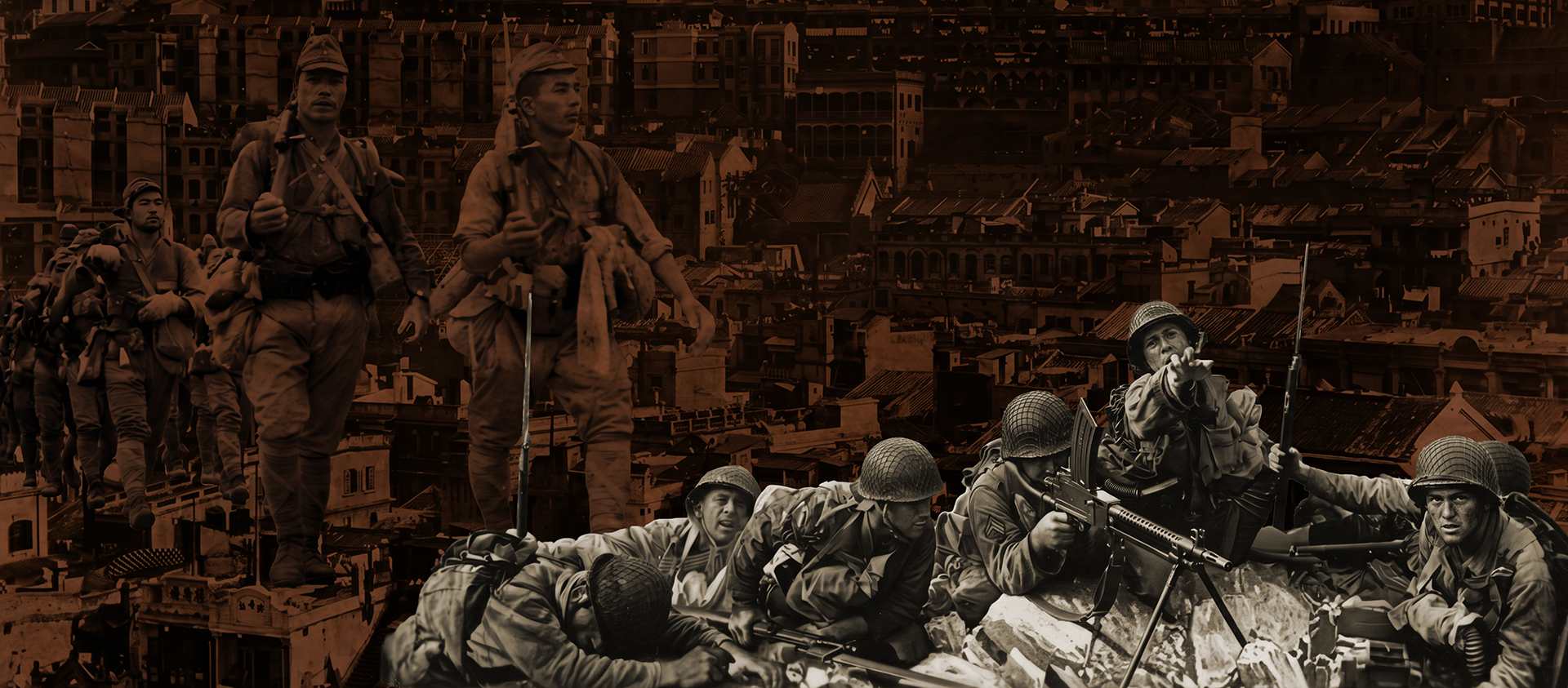
The Gin Drinkers Line stretched across the hills north of Kowloon and was supported by a network of bunkers, trenches, strongpoints, and communication routes. It was intended to prevent Japanese forces from reaching Kowloon and to buy valuable time for the defence of Hong Kong Island. At the centre of the line stood the Shing Mun Redoubt, one of its most important defensive positions.
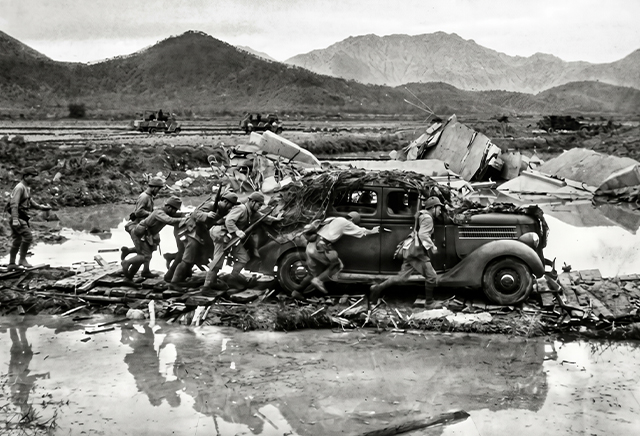
Events unfolded far more rapidly than anticipated. During the night of 9–10 December 1941, Japanese troops launched a surprise assault on the Shing Mun Redoubt. Its capture undermined the entire defensive system, making continued resistance along the Gin Drinkers Line impossible.
The collapse of the line marked the first major turning point of the campaign. What had been expected to delay the Japanese advance for days was breached within a short period, forcing the defenders to abandon northern Kowloon and begin a fighting withdrawal. From this point onward, the battle was no longer about holding the New Territories, but about preserving the ability to continue resistance from Hong Kong Island.
The Withdrawal from Kowloon
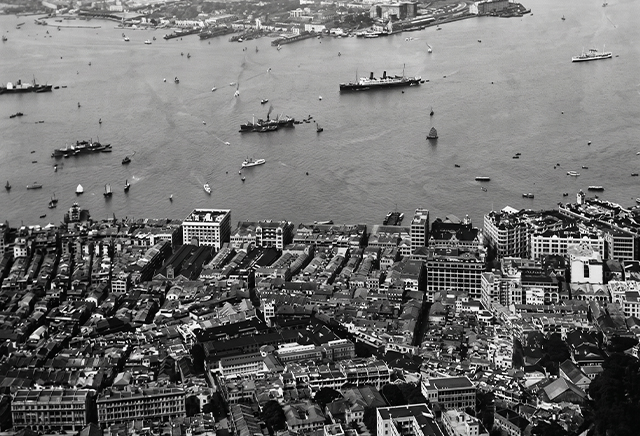
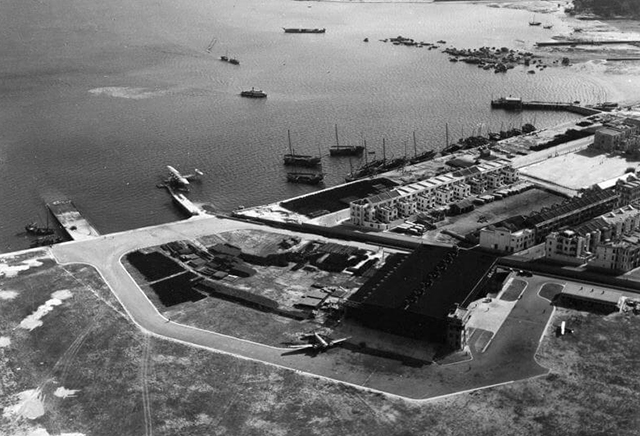
Following the loss of the Gin Drinkers Line, Allied forces began withdrawing from Kowloon to Hong Kong Island. Remaining in Kowloon risked trapping troops against the shoreline and preventing an orderly evacuation. Military commanders therefore decided to concentrate their remaining forces on the island, where Victoria Harbour offered a natural defensive barrier.
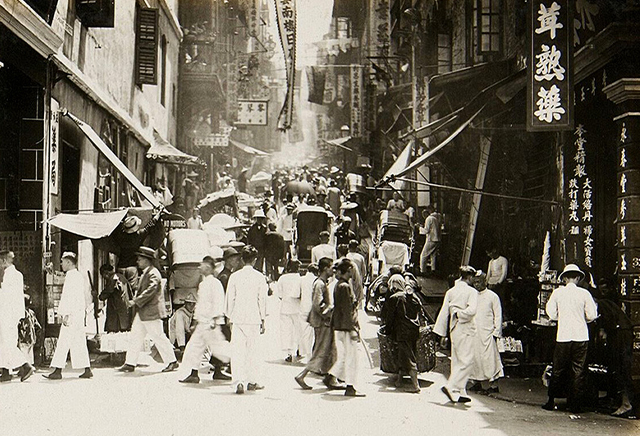
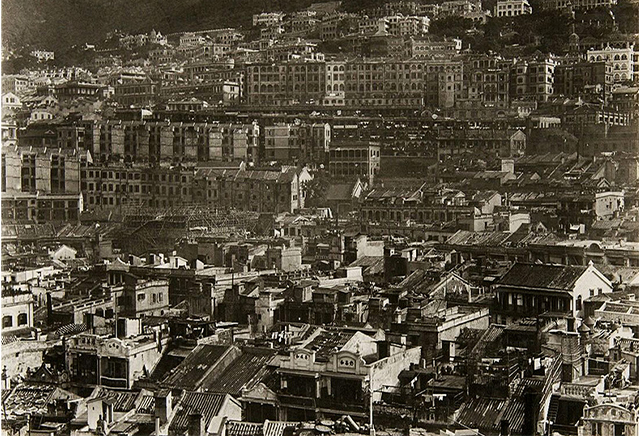
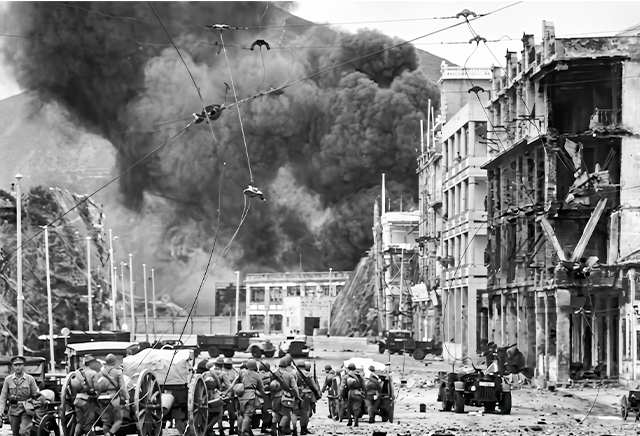
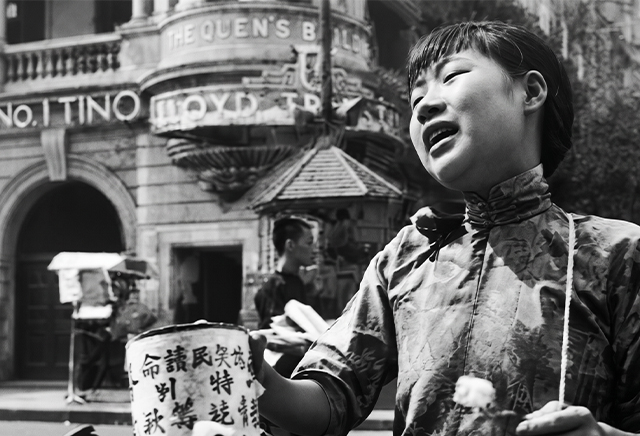
The withdrawal was a difficult and dangerous operation. Troops, equipment, and supplies had to be transported across the harbour while Japanese forces continued their advance. For civilians, the war now felt closer than ever. The fighting had moved from the New Territories into Kowloon, and the threat to Hong Kong Island was becoming increasingly apparent. Familiar streets were transformed by air-raid sirens, military checkpoints, artillery fire, and growing numbers of refugees.
By mid-December, Kowloon had fallen. Hong Kong Island became the colony's final major defensive position.
Victoria Harbour: The Last Barrier
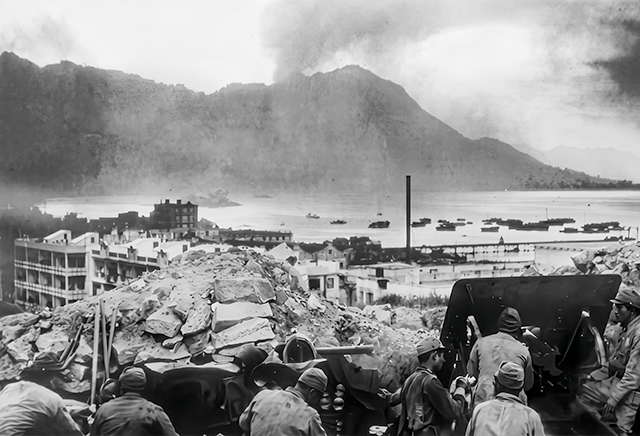
The defence of Hong Kong Island relied on coastal batteries, mountain strongholds, roadblocks, and infantry positions. Military planners hoped that Victoria Harbour would prevent a Japanese crossing while the island's rugged terrain could be used to slow any advance. However, once Kowloon had fallen, Japanese forces were able to observe and bombard positions across the harbour. Continuous artillery fire placed increasing strain on the defenders.
Before launching an amphibious assault, the Japanese subjected the island to sustained shelling and air attacks. Meanwhile, the defenders struggled with worsening shortages of supplies, disrupted communications, mounting casualties, and increasing pressure on medical facilities. As food, water, and ammunition became scarce, both soldiers and civilians were forced to endure growing hardship. The battle had become more than a military contest; it was now a question of how long the city could withstand siege conditions.
The Landing on Hong Kong Island
On the evening of 18 December 1941, Japanese forces crossed Victoria Harbour and landed on the northern shore of Hong Kong Island. Heavy fighting soon erupted across North Point, Quarry Bay, Taikoo, Wong Nai Chung Gap, Repulse Bay, and Stanley. The island's complex geography of ridges, valleys, roads, and coastlines fragmented the battlefield, creating numerous isolated engagements. Communication between defensive positions was frequently disrupted, leaving units to fight independently.
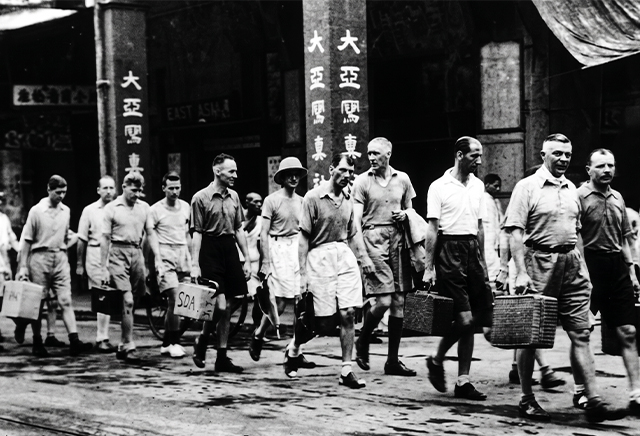
Among the fiercest battles were those fought around Wong Nai Chung Gap, a strategic corridor linking the northern and southern parts of the island. Determined resistance was met by repeated Japanese infiltration and flanking attacks, gradually splitting the defenders' positions. British, Canadian, Indian, and Hong Kong Volunteer Defence Corps units fought across the island, suffering heavy casualties. Many were killed, wounded, or taken prisoner. According to the Commonwealth War Graves Commission (CWGC), the Sai Wan War Cemetery serves as the final resting place and memorial for many Commonwealth servicemen who lost their lives during the Battle of Hong Kong or while held as prisoners of war, reflecting the heavy human cost of the campaign.
Isolation and Collapse
Following the landings, the island's defensive network became increasingly fragmented. Although resistance continued in many areas, effective coordination and reinforcement became progressively more difficult. Japanese forces captured key high ground and transportation routes, isolating defensive sectors from one another.
Hospitals, temporary aid stations, and residential neighbourhoods were drawn into the fighting, resulting in significant civilian suffering. By the final days of the battle, the defenders faced a combination of severe challenges: lost positions, dwindling ammunition, shortages of food and water, growing numbers of wounded personnel, damaged communications, and the absence of external reinforcements. Even so, resistance continued until the very end. Forces in Stanley, in particular, held out almost until the moment of surrender, demonstrating that the defence of Hong Kong did not collapse suddenly but continued under increasingly desperate circumstances.
Christmas Day Surrender: The Beginning of a Dark Era
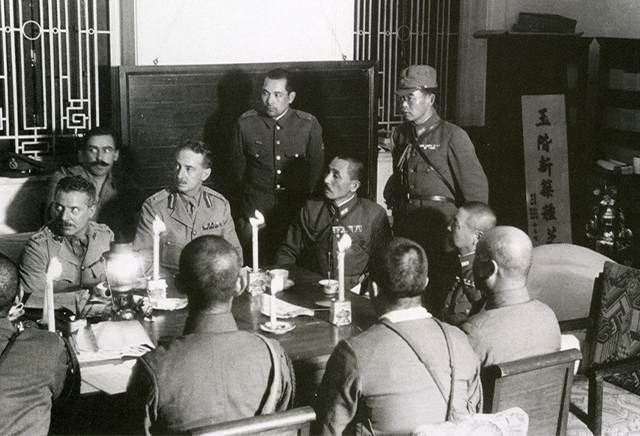
By 25 December 1941, the military situation had become untenable. That afternoon, Governor Sir Mark Young and Major-General Christopher Maltby formally surrendered Hong Kong to Japanese forces. The day would later become known as "Black Christmas." For Hong Kong, the surrender represented more than a military defeat. It marked the end of one era and the beginning of another, as British colonial administration was replaced by Japanese occupation. The occupation would last for three years and eight months.
Yet the fall of Hong Kong did not mark the end of resistance. Following the surrender of British and Commonwealth forces, organised opposition to Japanese occupation increasingly shifted to local resistance networks and Chinese guerrilla forces. Among the most significant were the Dongjiang Column and its Hong Kong and Kowloon Brigade, Communist-led anti-Japanese units that continued operating in and around Hong Kong throughout the occupation. Their activities included intelligence gathering, rescue operations, sabotage, and support for Allied personnel and local civilians. Their efforts would pave the way for the stories that followed: secret rescue operations, intelligence networks, guerrilla warfare, maritime missions, and civilian support activities that became a defining part of Hong Kong's wartime resistance.
Conclusion: A Defeat that Marked
the Beginning of Resistance
The Battle of Hong Kong ended in military defeat, but its legacy remains deeply embedded in Hong Kong's history. In just eighteen days, the territory witnessed invasion, retreat, urban warfare, and eventual surrender. The campaign exposed the vulnerabilities of Britain's Far Eastern defences while also highlighting the determination of those who fought despite overwhelming odds.
More importantly, the battle was not the end of Hong Kong's wartime story—it was the beginning. As conventional military resistance collapsed, Hong Kong's mountains, villages, coastlines, and urban neighbourhoods became the setting for a different kind of struggle. Rescue operations, intelligence work, guerrilla actions, underground networks, maritime transport, and civilian support would together form the next chapter of Hong Kong's resistance during the years of Japanese occupation.